

The exhibition “Scene Transition” takes viewers along the flow of different thoughts and expressions about nature from 5 young artists, including Pham Duc Tung (born. 1983), Truong Van Ngoc (born. 1990), Le Quynh Anh (born. 1995), Nguyen Ha My (born. 2000) and Ha Minh Thuan (born. 2001). The exhibition is open to visitors from July 19, 2026 to August 23, 2026, at Indochine House No. 8 Trang Thi, Hoan Kiem, Hanoi.
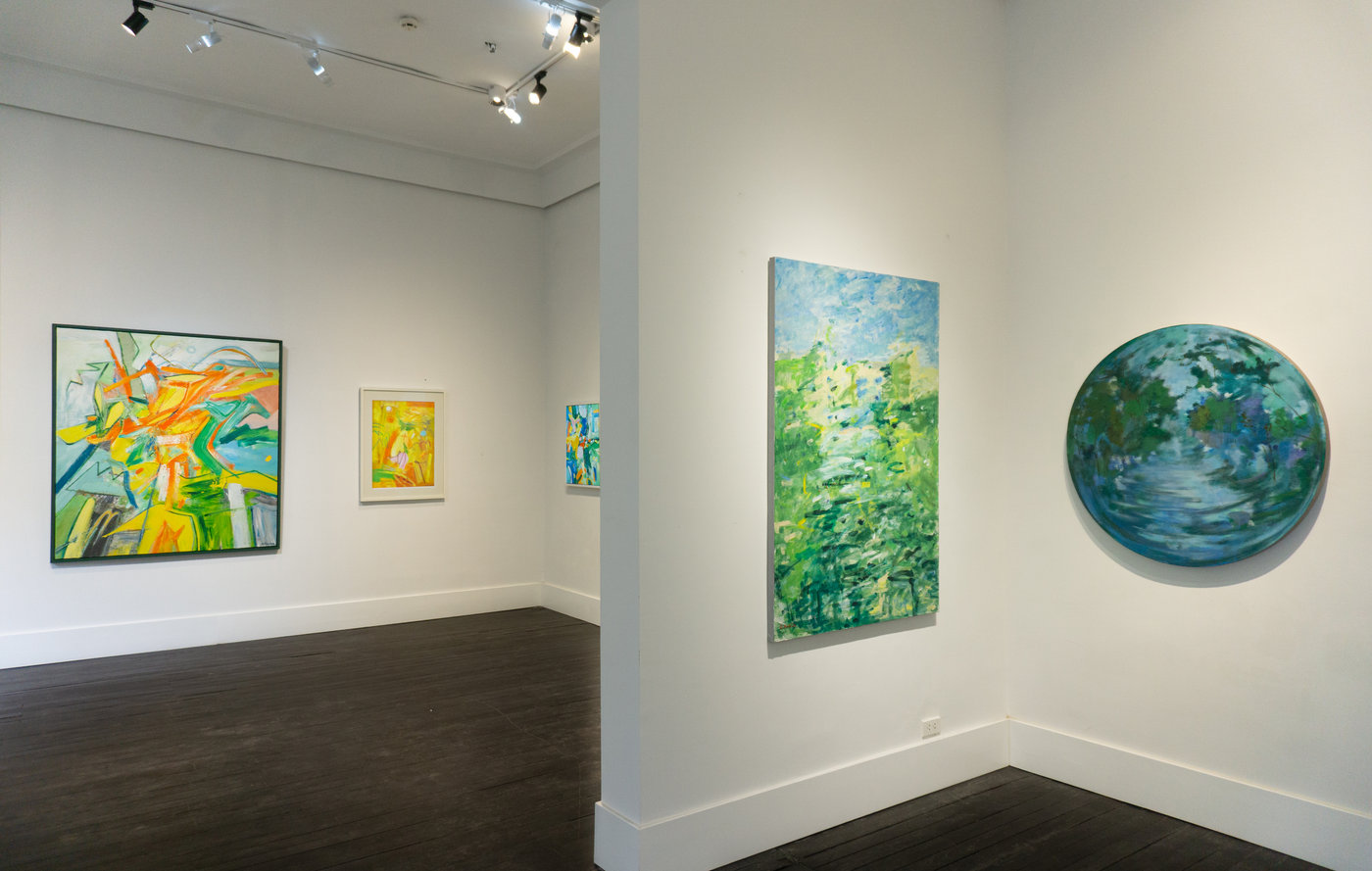
In the history of painting, from recreating the real world to efforts to interpret layers of ideas and inner experiences, realism goes hand in hand with abstraction as two modes of expressing ideas. important. With their own characteristics, they together expand the ability of painting to create new views of the world and of humans.
Both originating from the visible world, European realistic painting and Eastern aesthetics developed according to two different ideologies. If European realistic painting focuses on observing and perceiving the world through visible phenomena, affirming the value of a direct view of life, then in Eastern thinking, nature has long been the convergence of mind, will and religion. The value of this tradition lies not in its exact imitation of reality, but in its ability to capture the spirit and suggest layers of meaning that resonate beyond what is directly expressed.

Continuing that path, there was the appearance of abstract painting in the early 20th century as a link to continue exploring the expressive ability of art through liberating images from their descriptive function. Lines, colors and shapes are no longer just means of representing the world, but become elements that carry meaning in themselves, directly participating in the creation of emotions, thoughts and visual experiences. However, abstraction does not mean the denial of reality. Many works still originate from nature, memories or emotional experiences, but through the process of omission, the images are completely transformed and reconstructed.
The above mentioned streams of thought are the premise of “Changing scenes” – a small discussion about the influence of expression methods on the compositions of 5 young artists including Pham Duc Tung (born. 1983), Truong Van Ngoc (born. 1990), Le Quynh Anh (born. 1995), Nguyen Ha My (born. 2000) and Ha Minh Thuan (born. 2001). Here, the concept of “Scene change” not only evokes the change of the natural scene, but first of all is the process of movement in the artist’s mind when facing and expressing reality, not the reality that the eyes see, but the reality created by thoughts. This also reflects the transition of painting language from generalization to stylization and towards abstraction as a continuous flow.

Within the scope of the exhibition, despite differences in expression, the perspectives of the five artists all aim to explore the harmony between nature, memory and changes in Asian spiritual life. Thereby, the purpose of the exhibition is not to lead to a speculative confrontation to promote figurative or non-figurative painting because in fact the two-way movement still continues in the artist’s practice: from realism to abstraction and vice versa. Instead, each work reveals itself to the viewer’s sensibilities, whether belonging to one trend or another.
Lesson: Navigator Media
