

“Xuyên suốt sự nghiệp, quan điểm bản thân tôi luôn vững vàng và kiên định. Tôi giữ như thế trong suốt cuộc đời mình, nhưng tôi cũng đã và đang cập nhật kỹ năng liên tục để dấn thân trong nhiều lĩnh vực, học hỏi thêm những kỹ năng mới – nhiếp ảnh, viết quảng cáo… cho phép tôi có được những góc nhìn sáng tạo khác nhau. Bạn biết càng nhiều, bạn học được càng nhiều; bạn hiểu biết càng nhiều, bạn giải quyết vấn đề càng tốt" – Fabien Baron

Từ năm 1982, Fabien Baron đã bắt đầu đảm nhiệm vai trò Art Director (tạm dịch: chỉ đạo nghệ thuật) cho các tạp chí như Barneys New York, New York Woman Magazine, Harper’s Bazaar, Vogue Ý và Pháp… và chỉ đạo nội dung cho tạp chí Interview. Cho đến năm 1990, ông thành lập công ty Baron & Baron, một agency chuyên về quảng cáo dành cho các thương hiệu thời trang, nước hoa và mỹ phẩm cao cấp.
Fabien Baron is considered one of the most successful and influential creative directors as well as the most sought after by music fans today. Throughout a career spanning more than 35 years, he has shaped the visual language of the fashion and luxury products industry through many magazine designs and guiding advertisements and branding campaigns. He is the person behind many successful advertising campaigns, creating many fashion icons… He holds many roles, sometimes as creative director, sometimes as editor, sometimes as photographer and designer.
We sat down with Baron to discuss the highly anticipated first publication of his career Fabien Baron: Works 1983-2019, and find out why its publication marks an important milestone in his life and work.
Tony Chambers: What made you hesitate so long? He produced a huge body of work and around the world there are many people in his position who would have published a book like this much earlier.
Fabien Baron: I tried starting the book about three times before but was really overwhelmed by the archive and how complex it was. Maybe it’s because at the time I was just cataloging work and I found that uninteresting – copying and recreating every project, arranging them together in time series – it just didn’t work for me. This time I tried a different approach – to really try and find a new direction, to create a different way of thinking and working.
Fabien Baron. Photography: Mert Alas and Marcus Piggott
TC: Does discovering and changing trends give you a sense of freedom? I see that you mix your commercial work with a lot of other personal work.
FB: Hoàn toàn đúng. Cách tiếp cận của tôi trước đây là tách riêng chúng ra, nhưng sau đó tôi nhận ra rằng tôi đã làm tất cả những công việc này một cách độc lập, điều đó hiện diện trong cuộc sống của tôi nhưng mọi người thường không biết gì – mọi người nghĩ tôi là một "Anh chàng tạp chí"- người kiêm luôn việc thiết kế chai lọ và quảng cáo. Cuốn sách được sắp xếp gồm các chương đại diện cho những triết lý của tôi mà tôi đã thiết lập qua nhiều năm và những điều xảy ra xuyên suốt sự nghiệp của tôi. Tôi muốn đặt một cái gì đó từ những năm 1980 bên cạnh một thứ gì đó những năm 2000 và cho thấy sự tương đồng giữa chúng – tại sao tôi nghĩ theo cách này chứ không phải cách khác, và tại sao điều đó khiến tôi trở thành phiên bản hoàn hảo hơn của chính mình.
TC: That’s a pretty progressive, creative, and objective way to create a book. There are also very poetic chapter subtitles – do these words appear after you have edited the image or does the image follow the theme?
FB: A little bit of everything. Some words changed but the idea of the chapter’s topic appeared very naturally in my mind. I know exactly what should stand out and what I feel is what truly defines who I am. So I clearly understand what to do and how to organize them. But then some work came in after all the chapters were decided, so I consider it a mix.
TC: It’s quite intuitive, isn’t it?
FB: Yeah – my mind, they work that way.n n TC: There is a huge amount of visual material and imagery in these 200 pages but I guess it’s really a small percentage of the total work you did. It must have been a difficult editing and selection process.
FB: Oh my god. They were an absolute nightmare to put together – there were so many that I really liked so I put them in. Less than 10 percent of my magazine work is included and a small percentage of work is unpublished. Sometimes I choose just two photos out of a series of 500 or 700. I take photos all the time. There’s a bunch of stuff and a bunch of pictures of a bunch of work.

Set Design, installation, and photography, 2003 (left), Bottega Veneta, film director,

Liquid Light Series II, photography, 2017
TC: What was your design thinking and decision-making about the format and size of the book?
FB: The size of the book is based on the size of the zines I’ve done. I didn’t want any of the magazines reproduced in the book to look larger than how they appeared when first published. That means the book automatically has one size.
TC: So what’s the biggest magazine format you’ve done?
FB: Interview. Other than that, I couldn’t find any other oversized books to make. They are so difficult to put on the shelf, it’s a nightmare for everyone. It’s really heavy and cumbersome to open. If you have a book that is always closed and placed on your desk or stacked on a shelf, you will never open it again.
The more you know, the more you learn, the more knowledge you have, and the good thing is the more you know how to solve every problem.
TC: You say you often return to making magazines, because they bring a special sense of freedom, different from everything else. Do you think the magazine is still suitable for current life and society?
FB: I believe they are still relevant, but need to be done differently. Today’s news is no longer attractive, because readers can easily find information on the internet. Nowadays, conflicting opinions are the attractive factor. Magazines need to show that they are not simply stating an opinion, but are providing a clear direction and expressing a strong point of view.
Content needs to be properly evaluated, direction and visuals need to stand out even more. I see the future of magazines being more in-depth and giving more personal opinions, as well as establishing a strong idea that people want to engage with magazines because they see themselves.
The productivity of producing work for a magazine is still much higher than what you can do on a website, Instagram or on the internet. So, there is still room for that – space for you to create content that is high quality and done in a way that they can bring back feelings and emotions, opinions to the readers. I think that’s the opportunity for them. They need to take a stand. But in my observation, today’s magazines don’t offer much useful dissent, and this is because they are driven by advertisers. So they don’t really take a stand for anything.
TC: With such a large workload, having a studio behind you to support you is definitely indispensable. How many members are there currently in your studio team?
FB: We have an office in Paris of 5 to 6 people, and one in New York of approximately 50 people.
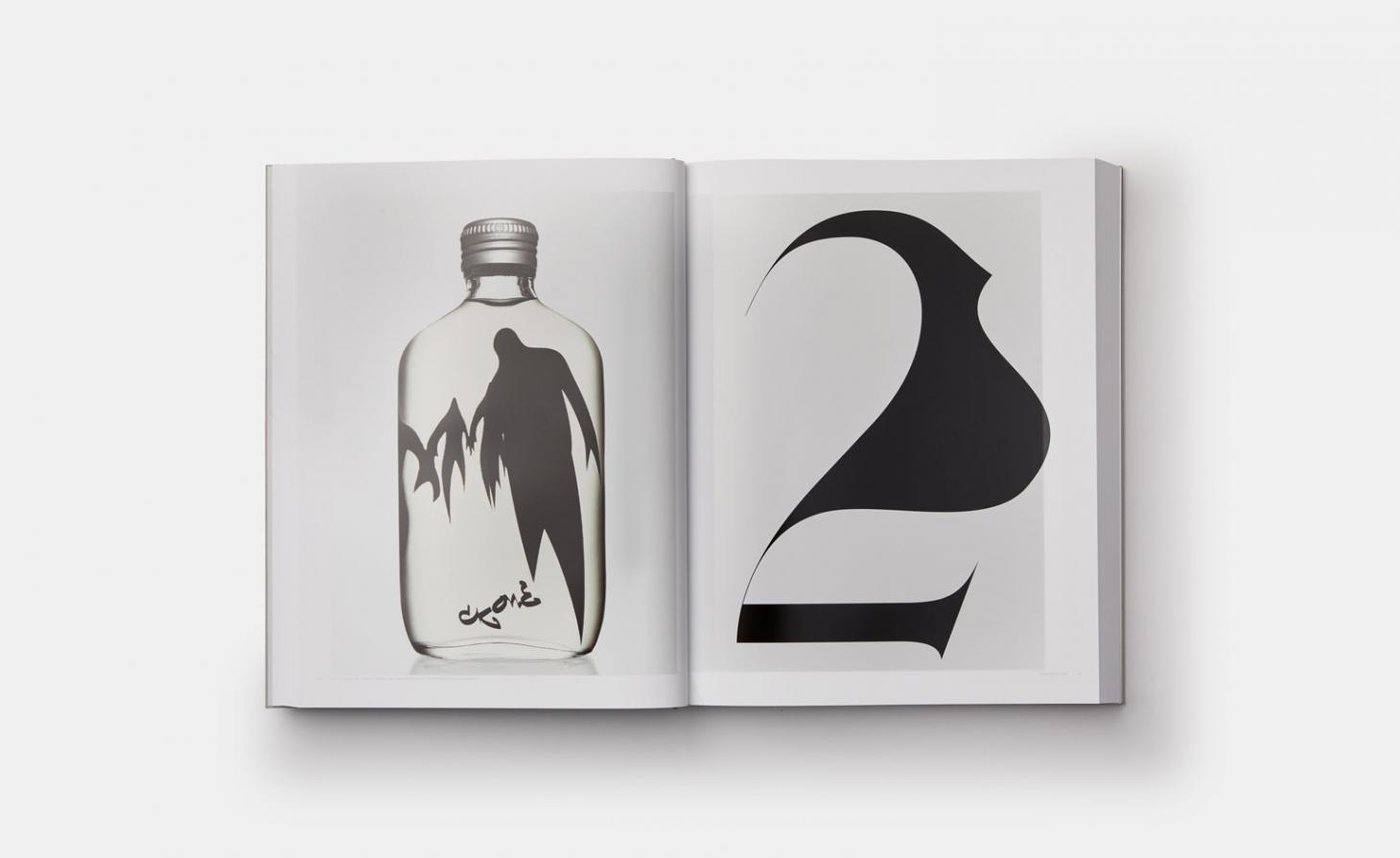
Calvin Klein CK One, product design, 2003, painting by Futura, photographed by Frederik Lieberath (left), typography, 2008 (right).

Image below: Monuments Series, photography, 2014
TC: How are you able to manage that amount of staff while ensuring that the released works clearly reflect your personal impression?
FB: Every page in my book is carefully researched and designed by me. My method is like painting a self-portrait, I just record everything that goes on in my head and how I act – so it is very important that the works are scrutinized by me personally, and not by any other assistants.
As for studio management – it has taken me a lot of time – but now we have reached the stage where what we do is not always about me, but about the company and its operating philosophy.
There is a lot of work that can be done in my absence. The studio can completely work on its own without relying on my direction. It feels like you have another hand with the same way of thinking and mindset as you helping , but it’s not your hand. It’s great that I already have so many talented people in my office who are so creative that they have no need to copy my creative vision. They learn it, and expand that creative philosophy according to a certain pattern. Many times I feel like my office runs more efficiently when I’m not involved.
TC: Do you think this book will represent a sign and an announcement of what is to come?
FB: That’s right. By placing my personal work on the page, it means that I am growing and ready to share my designs with everyone. I’m looking for a gallery and intend to print out all my work. I have a treasure trove of photos and paintings, what is in the book is just a prototype, a beginning. I will build my own atelier and continue to develop in a more creative direction.
TC: Will you reject commercial influence?
FB: Exactly. The two platforms I want to develop are photography and film. Those are two things I can work on and feel happy at the same time. Many times friends suggested that I should organize an exhibition of my own works, but I always refused. I feel awkward that you’re showing off your personal designs while also being a commercial artist working for a magazine – I mean how can I pretend that I’m devoted to art when I’m a commercial artist. Nowadays, when I am older, there are too many works that I have never shown to the public. I want to show everything, so I’m going to take action.
TC: Have you ever thought about producing movies?
FB: Sure – it’s on my list too. I have been doing advertising for more than 25 years – more than 150 ads for companies, so I am very interested in producing movies myself.
TC: So, this book will mark a very important moment.
FB: This book was published when my life turned around. However, this does not mean I will completely depart from what I have done before!
Wallpaper Source – Bai Chip Phan (According to FASHIONNET)
