

June 1, 2020, at headquarters in Goodwood, England, Rolls-Royce celebrates the 110th anniversary of the world’s first flight with a non-stop two-way route across the English Bay personally conducted by Mr. Charles Stewart Rolls.
In the field of aviation, Mr. Rolls was the pioneer who made a round-trip flight from Dover to Sangatte and returned on June 2, 1910. Rolls’ record for a round-trip flight was achieved nearly 1 year after Louis Blériot made a one-way flight across the English Bay. The flight proved to be Rolls’ last great aeronautical achievement, just a month before his life came to an end at the age of 32.
At 6:30 pm on June 2, 1910, Charles Stewart Rolls alone took off from Swingate airport, near Dover, to make the first round-trip flight across the English Gulf without stopping.

He had waited in frustration for more than a week before because the flight was constantly delayed by high winds, fog or technical problems. But in the end, flying conditions were perfect. According to the Daily Telegraph, Rolls reached an altitude of 900 feet and a speed of about 40 mph as it approached the French coast. At 7:15 p.m., he flew over a small French town where the famous Channel Tunnel is today. Tilting the plane, Rolls threw out three envelopes with the message: “Greetings to the French Automobile Club… Dropped from the Wright plane flying from England to France. C.S. Rolls, June 1910. P/s. Vive l’Entente”.
Then he turned north, and towards the English coast. Flauntingly, Rolls gave the crowd an extra show by flying in circles around the towers outside the town’s medieval castle. The crowd absolutely loved the performance. This was more than mere entertainment, they knew they had witnessed a historic moment.

During the 95-minute adventure, Rolls achieved two historic milestones. He became the first Briton to fly a plane across the English Bay and the first pilot to fly a plane from England to France and back without stopping at any stop. Rolls made his flight in the Wright Flyer designed by brothers Wilbur and Orville Wright, who were the first to successfully test an airplane in 1903, just 7 years earlier.

Rolls’ adventure was actually dangerous. The plane is made of fabric and wood, strung with beams and ropes, has a weight equivalent to a grand piano, with a wingspan of just 12 meters and weighs just 457kg including the engine. Flying over the ocean in a primitive aircraft is obviously very dangerous, and sHis only preparations for safety were a life jacket and four large buoyancy bags filled with compressed air tied to the machine.

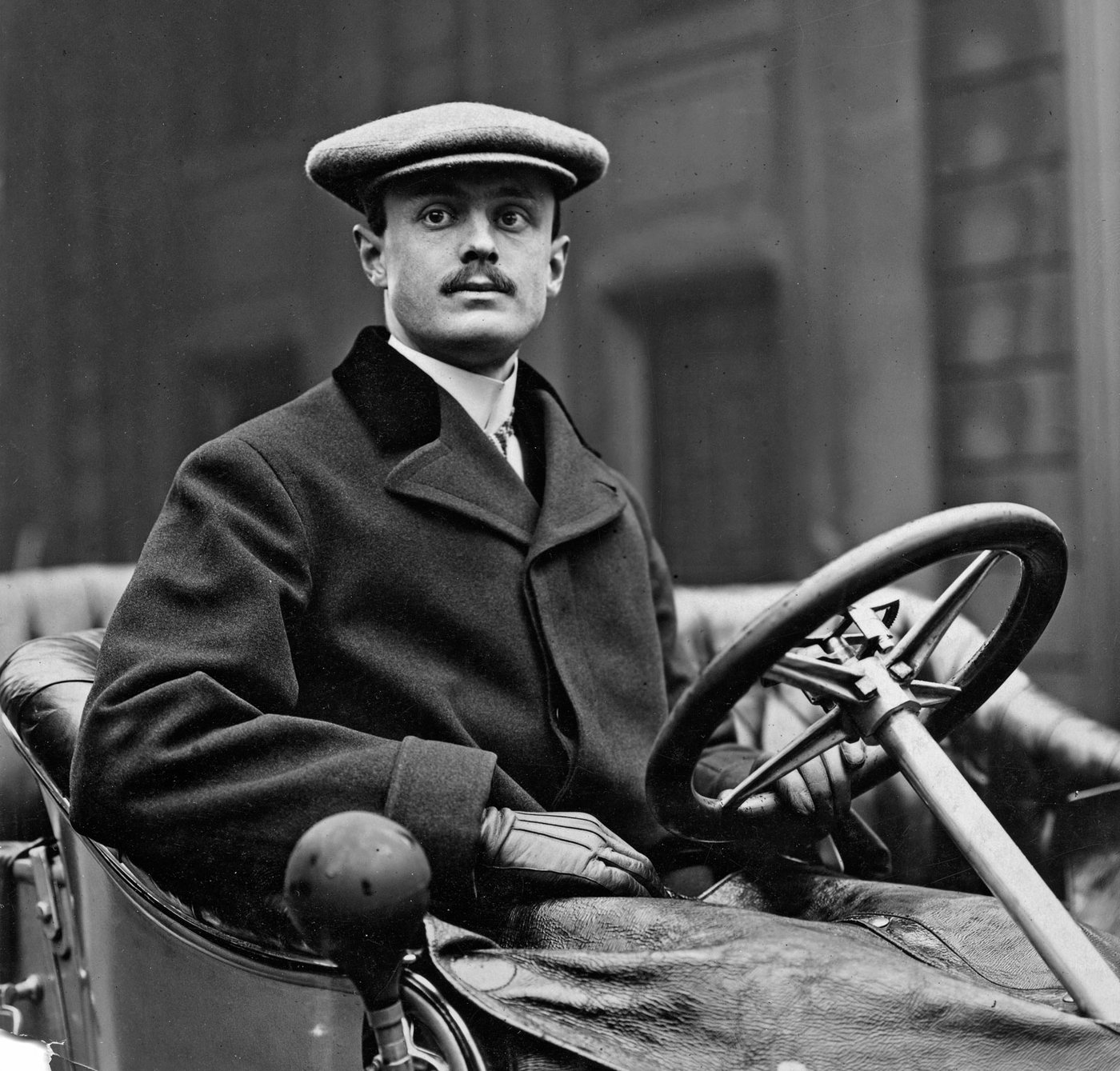
His flying career spanned almost the entire history of aviation. Born in 1877, Rolls was fascinated with engines from his school days. He went on to earn a degree in Mechanical Engineering – Applied from Trinity College, Cambridge and was attracted to flight from the first days. He was a founder member of the Royal Aeronautical Club, initially a balloonist, making more than 170 flights and winning the Gordon Bennett gold medal in 1903 for the longest aloft flight. In 1909, Rolls was the one who invited the Wright brothers from America arrives He interacted with the Royal Aeronautical Club. A year later, he became the second Briton to be granted a pilot’s license.

After the historic meeting in 1904, Rolls tried to persuade Henry Royce to build an airplane but got no response. Undeterred, Rolls bought the Wright Flyer and continued to make more than 200 flights.
Unfortunately, a month after the flight over the English Bay, Rolls had an accident on that same plane. On June 12, 1910, during a race at Bournemouth, the plane’s tail broke and the plane fell 100 feet to the ground, right near the crowded grandstand. Rolls died right then. In history he was one of 12 people to die in plane crashes, and the first Briton to lose his life in a powered aircraft. He passed away just a few weeks short of his 33rd birthday.
Today Rolls is more famous for his automotive achievements, but his contributions to aviation are huge and very important. In April 1912, a statue commemorating the historic flight was erected in Guilford Gardens, now in Marine Parade Gardens – which was re-opened by the chairman of the Rolls-Royce Heritage Trust.
Torsten Müller-Ötvös, CEO of Rolls-Royce Motor Cars said: “Charles Rolls combined technical thinking with a daring, adventurous spirit. It’s no wonder he was completely attracted to cars and airplanes. He was truly a pioneer in both fields, his record victories were the premise for the development of airplanes and automobiles.”

“Rolls challenged the limits of what was thought possible. With this flight, he took human ambition as well as technology to new heights. What he achieved in a short life was extraordinary and inspiring. His perspective and courage still live on in our company after more than a century”, shared Torsten Müller-Ötvös. “2020 is the right year to commemorate this historic flight. In addition to the 110th anniversary, at the same time, we still face severe restrictions on free movement due to the Covid pandemic. It encourages us to look beyond the limits and dream of the adventures we will take in the future, as a reminder that nothing is impossible.”
Lesson: Navigator Media
n
